
Responsible Governance and Ethical Leadership: Drivers of Development Funding in 2026
Kevin Osborne, Globethics Strategic Partnerships and Development Manager. 27 February 2026.
Global development and humanitarian funding are undergoing structural recalibration. Geopolitical shifts, shrinking budgets, and changing donor priorities are creating a new benchmark: responsible governance, ethical leadership, and locally embedded operations are now decisive for institutional credibility and long‑term funding.
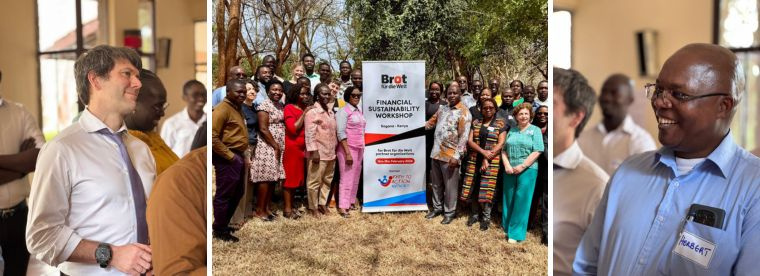
Earlier in February, alongside Herbert Makinda, Globethics Eastern Africa Regional Manager, I attended a Financial Sustainability workshop in Sagana, Kenya, hosted by Brot für die Welt (Bread for the World), a longtime partner of Globethics and sponsor of the Ethical Leadership for an Inclusive Future in Sub-Saharan Africa (ELIF) initiative.
Bread for the World deserves particular recognition for the depth and integrity of this training. They invested heavily to ensure it was not just technically useful but genuinely transformative — a thorough, honest effort to strengthen the capacity of partners and equip them to flourish as credible, resilient organisations in today’s difficult funding environment. Their approach went far beyond compliance or grant‑management training. It demonstrated a committed, values‑driven investment in partners’ long‑term sustainability, and in many ways embodied a concrete, ethical step toward decolonising aid: shifting power, knowledge, and strategic agency back to local and regional actors.
The workshop brought together participants from Kenya, Uganda, Mozambique, the Netherlands, Togo, and beyond to exchange insights and practical strategies for mobilising resources and building long-term sustainability. Key learning areas included organisational relevance, credibility, relationship-building, visibility, and effective calls to action. Several trends in funding emerged during the course of the week.
1. Local Institutional Presence as Governance Signal
Funders increasingly require organisations to operate through national or regional entities, ensuring accountability, transparency, and regional ownership. This aligns with broader calls for localisation and ethical governance, echoing recommendations from the 2025 Arigatou International–Globethics roundtable, which emphasised locally-led, context-sensitive funding to safeguard human rights, equity, and development outcomes.
2. Diversification and Ethical Partnerships
Over-reliance on single donors is increasingly viewed as a vulnerability. Ethical diversification — engaging multiple partners while maintaining values-aligned governance — strengthens institutional resilience. Globethics President Dietrich Werner, at the 6th European Policy Dialogue Forum (KAICIID, 2025), highlighted how ethical investments require shared moral foundations, transparency, and rigorous standards to ensure credibility and long-term impact.
3. Strategic Resource Mobilisation and Leadership
Donors now prioritise organisations with professionalised resource mobilisation, clear KPIs, and governance frameworks that reflect accountability, inclusivity, and mission alignment. Ethical leadership is no longer a supplementary concern — it underpins organisational credibility, partner trust, and funding success.
4. Embedding Ethics and Accountability in Funding
Both previous discussions — on ethical investment in Europe and on humanitarian funding ethics in Geneva — reinforce a common message: funding decisions must integrate justice, solidarity, and ethical responsibility. Organisations that embed these principles into governance structures are better positioned to navigate crises, maintain independence, and generate sustainable social impact.
Development funding in 2026 rewards institutions that demonstrate ethical leadership, accountable governance, and locally grounded operations. Embedding these principles is not just mission-aligned — it is a strategic imperative for resilience, credibility, and long-term impact.