
Journal of Ethics in Higher Education – Issue 8.2(2026)
Abstract
This issue brings together nine contributions that examine the ethical, pedagogical, governance and inclusion challenges arising from the rapid transformation of higher education. Although the papers address diverse contexts and themes, they are united by a common concern: ensuring that educational innovation, particularly through artificial intelligence (AI), is guided by responsible governance, ethical reflection and equitable participation.
A dominant theme is the responsible adoption of AI in higher education. Kane and Davis explore the ethical oversight of predictive analytics through a case study demonstrating that institutional governance of AI must extend beyond technical performance to encompass transparency, accountability and inclusive decision-making involving diverse stakeholders. Complementing this perspective, Bahrini and Soltani present a two-part empirical investigation of generative AI adoption among Tunisian university students. Their findings challenge conventional technology acceptance models by showing that ethical perceptions, habitual use and organisational support outweigh perceived usefulness and ease of use in shaping AI adoption. Together, the two papers provide valuable theoretical and practical insights into the behavioural, organisational and ethical conditions that underpin sustainable AI integration. Abdelaziz further advances this discussion by proposing Ethical Readiness as a pre-deployment governance framework, arguing that higher education institutions require mature governance structures, accountability mechanisms and institutional capacity before implementing Responsible AI. Completing the AI-focused contributions, Kimboka and Rashid examine the implications of AI-assisted learning for student assessment in Tanzanian higher education. Their qualitative study advocates assessment approaches that privilege critical thinking, reflection, authentic performance and transparent use of AI, thereby preserving academic integrity while recognising evolving forms of learning.
The issue also broadens its ethical focus beyond AI. Çetin introduces the Internal Biodiversity Framework, an innovative conceptual model that reimagines conscience as a dynamic ecosystem of multiple ethical voices rather than a single moral authority. Drawing upon psychology, philosophy and neuroscience, the framework offers practical tools for cultivating ethical pluralism, resilience and leadership within higher education.
Educational inclusion forms a second major strand. Cosmas analyses the influence of Article 24 of the United Nations Convention on the Rights of Persons with Disabilities on Tanzania’s legal, policy and strategic frameworks for inclusive education, highlighting both significant progress and continuing barriers to disability-inclusive learning. Two further papers examine educational participation among mothers. Nemes synthesises evidence from Sub-Saharan Africa to reveal the interconnected academic, financial and social challenges experienced by student mothers, while Ntiruvakule and Mkonongwa demonstrate how supportive teacher–student relationships and effective engagement strategies enhance learning opportunities for teenage mothers in Tanzania’s non-formal secondary education sector.
Collectively, the contributions demonstrate that ethical governance, inclusive educational practices and human-centred innovation are mutually reinforcing priorities. They offer important conceptual advances, empirical evidence and practical recommendations that contribute to ongoing international debates on the future of higher education in an increasingly AI-enabled and socially diverse world.
You might also be interested in...

Reinventing Academic Integrity in the Age of Artificial Intelligence
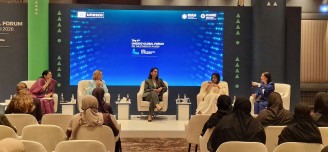
Globethics at the 4th UNESCO Global Forum on the Ethics of AI
Globethics' Executive Director and AI Ethics Manager joined UNESCO's Riyadh forum, moderating panels on financing, partnerships, and gender-inclusive AI governance policy.
Journal of Ethics in Higher Education – Issue 8.1(2026)
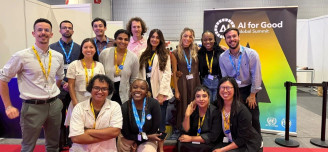
Civil Society Takes Its Seat at the AI Governance Table
Globethics brings 14 young ethical AI leaders to Geneva Digital Week 2026.