
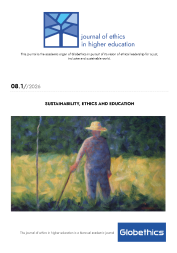
Journal of Ethics in Higher Education – Issue 8.1(2026)
Abstract
This Issue 8.1(2026) brings together seven contributions that examine the ethical, pedagogical and societal responsibilities of higher education in an era of rapid technological, institutional and global change. While addressing diverse educational contexts across Africa and Asia, the papers are united by a shared commitment to sustainability, responsible leadership, inclusion and the moral purpose of higher education.
Several contributions explore how higher education can cultivate ethically grounded leadership and institutional resilience. Terblanche, Putter and De Vries argue for a reimagining of Chartered Accountancy education in South Africa through an integrated theoretical framework that combines critical pedagogy, global citizenship and ubuntu-inspired democratic education. Their conceptual contribution seeks to develop socially responsible professionals capable of ethical, consequence-aware decision-making. Complementing this perspective, Singh and Ehlers examine the transformation of higher education institutions from traditional ‘Ivory Tower’ models towards responsive, stakeholder-centred leadership, emphasising sustainability, institutional relevance and long-term resilience.
The issue also addresses the opportunities and ethical challenges presented by artificial intelligence in higher education. Van Wyk investigates panellists’ lived experiences of AI guardrails, demonstrating the importance of robust ethical governance, institutional safeguards and responsible AI practices in supporting academic integrity. Mongwe, Van den Berg and Mudau further examine the ethical dilemmas surrounding generative AI, highlighting how graduate students negotiate emerging tensions between technological innovation and academic integrity within a South African university. Together, these studies underline the need for coherent institutional frameworks that enable the responsible adoption of AI while preserving trust, transparency and educational quality.
Inclusion and equitable participation form another important theme. Rembach and Von Hagen reflect on a collaborative pedagogical initiative that integrates expertise in information and communication technology with inclusive education to strengthen participation in online learning environments. Their work emphasises that meaningful access to higher education depends not only on technology but also on thoughtfully designed pedagogical practices that accommodate diverse student needs.
The final contributions broaden the discussion by examining education's role in fostering peaceful societies and human development. Geovasky, Christiani, Sofjan and Ahnaf demonstrate that peace education strongly predicts empathy and tolerance among university students in Indonesia, reinforcing the value of experiential pedagogies in promoting reconciliation and social cohesion within religiously diverse societies. Finally, Randriamirado revisits Immanuel Kant's philosophy of education, presenting education as the essential process through which human beings develop their moral capacities, freedom and humanity, thereby reaffirming its enduring significance for sustainable human development.
Collectively, these contributions illustrate that sustainable higher education extends beyond technological innovation to encompass ethical leadership, inclusive pedagogy, institutional responsiveness, peaceful coexistence and the holistic development of individuals and society.
You might also be interested in...
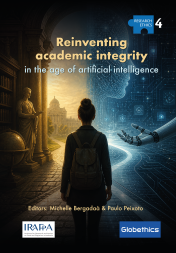
Reinventing Academic Integrity in the Age of Artificial Intelligence

Globethics at the 4th UNESCO Global Forum on the Ethics of AI
Globethics' Executive Director and AI Ethics Manager joined UNESCO's Riyadh forum, moderating panels on financing, partnerships, and gender-inclusive AI governance policy.
Journal of Ethics in Higher Education – Issue 8.2(2026)
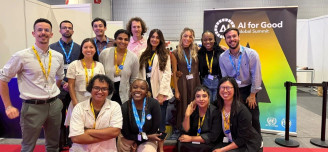
Civil Society Takes Its Seat at the AI Governance Table
Globethics brings 14 young ethical AI leaders to Geneva Digital Week 2026.