
Ethical Risk Is Strategic Exposure: Reflections from WAIQ at Harvard Law School
R. Kat Morse, Acting Head of Solutions Hub, June 2026.

At Harvard Law School’s Web3, AI and Quantum Computing executive conference, one point became clear across sectors: the future of emerging technology will not be decided by technical capability alone. It will be decided by trust.
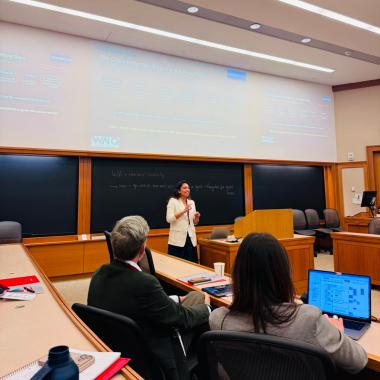
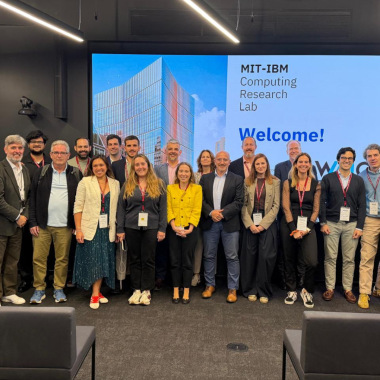
Globethics had the privilege of opening the programme with a keynote on “Drift or Design in the Age of Web3, AI and Quantum.” The room brought together executives and experts from Europe and the United States across multiple industries such as deep tech, law, energy, mobility, and more.
Web3, AI and Quantum are often discussed separately. Web3 is associated with decentralised trust and digital identity. AI is associated with intelligence, automation, prediction and productivity. Quantum is associated with computation, scientific breakthrough and the future of digital security.
But from a business and governance perspective, these technologies are converging around a shared institutional challenge. Together, they are becoming part of the infrastructure through which societies verify identity, allocate trust, automate judgement, secure information and distribute power.
This makes them not only technical innovations, but governance technologies. The keynote explored three questions every executive working with emerging technology will increasingly need to answer:
Who gets trusted? Identity, provenance and access determine who — or what — enters the system.
Who gets judged? Automated systems increasingly classify, prioritise, recommend and escalate decisions.
Who controls the data? Data governance now defines regulatory, cybersecurity, operational and trust exposure.
These are not narrow technology questions. They are board-level governance questions.
The point became clearest during a live board-level risk exercise. Participants were asked which ethical risk they would escalate first: manipulated identity systems, uncontrolled data flows, unexplainable AI triage, unclear vendor accountability, incentives that reward speed over safety, or long-term security treated as a short-term technical issue.
The discussion did not stay technical. Executives moved quickly to exposure, accountability, leadership timing, incentives and trust.
That is the core shift: Ethical risk is the early-warning signal of strategic exposure.
Many institutional failures do not begin as obvious legal, financial or operational risks. They begin earlier, as ethical risks.
A decision may be legal and still damage trust.
A system may be efficient and still be unfair.
A data model may create value and still be disproportionate.
If ignored, these risks can become regulatory scrutiny, litigation exposure, operational disruption, reputational damage, investor concern and loss of institutional trust.
This is why ethics cannot sit only in values statements, principles or communications. It must enter the machinery of governance: risk appetite, product design, data strategy, investment decisions, vendor management, escalation pathways, accountability structures, monitoring and board oversight.
This is where Globethics’ work on Ethical Risk Management is designed to help: supporting leaders to identify ethical risk early, translate it into governance language, and act before exposure becomes institutional failure.
Ethical Risk Management is not compliance, and it is not philosophical reflection added at the end. It is a leadership and governance discipline for identifying, assessing and responding to ethical risks before they become institutional failures.
The goal is not to make emerging technology risk-free. That is impossible. The goal is to make leadership more deliberate before risk becomes failure. That requires a shift:
- Not ethics after innovation.
- Not compliance after deployment.
- Not reputation management after the scandal.
- But governance before trust breaks.
For partners, funders and institutions working at the intersection of emerging technology, leadership and public trust, this is a critical moment. The question is no longer only what we can build. It is what kind of institutions we need to become in order to govern what we build responsibly.
Globethics welcomes continued conversation with organisations seeking to strengthen responsible governance for Web3, AI, Quantum and the next generation of emerging technologies — before trust breaks, not after.