
Ethical Mining and Governance in Africa’s Mineral Future
Herbert Makinda, Globethics Eastern Africa Regional Manager, May 2026.
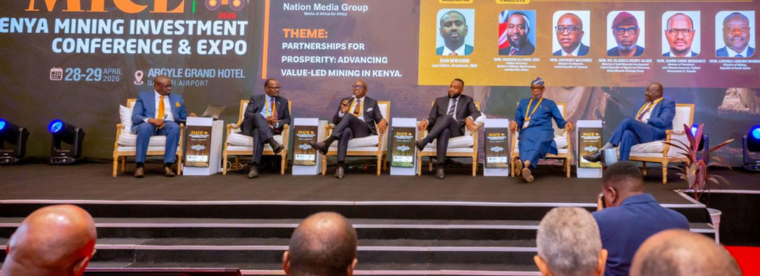
The Kenya Mining Investment Conference & Exhibition (MICE) 2026, held in Nairobi on 28–29 April, brought together over 700 stakeholders from across Africa and beyond. More than a high-level gathering, it reflected a growing shift in how the continent is rethinking its mineral wealth through the lens of long-term, sustainable development for the region and its people.
At its core, the conference challenged a long-standing pattern: Africa exporting raw minerals while capturing minimal value. Participants emphasised that the future of mining in Africa lies in moving beyond extraction toward value addition—processing and refining minerals locally to create jobs, strengthen industries and ensure long-term economic resilience. This is not only an economic priority but a question of ethics: who benefits from natural resources, and how.
Governance as the Backbone of Ethical Mining
A central pillar of the discussions was responsible governance. Kenya’s efforts to improve transparency—through digital licensing systems, regulatory reforms and institutional coordination—were highlighted as important progress. Strong governance frameworks are essential for building trust, attracting responsible investment, and ensuring that mining revenues contribute to national and community development. Yet governance is not only technical; it requires inclusive engagement with communities and fair systems for sharing benefits.
Artisanal Mining and Inclusive Development
The conference also underscored the importance of artisanal and small-scale mining (ASM), which supports millions of livelihoods across the continent. Formalising ASM—through access to finance, training and markets—is vital for improving both productivity and sustainability. Tanzania’s experience demonstrates how supportive policies can transform ASM into a major contributor to economic growth. Kenya, while still addressing regulatory and financial challenges, is taking steps toward more structured and inclusive systems.
Financing the Value Chain Responsibly
Financing emerged as another key enabler. Expanding access to capital across the mining value chain, particularly for smaller operators, is essential. However, participants stressed that responsible investment must guide these efforts. This means aligning financial flows with environmental protection, social equity, and transparent governance, ensuring that mining activities support long-term development rather than short-term gains.
Redefining Value and Africa’s Global Role
Africa’s broader role in global mineral markets was also re-examined. While the continent holds over 30% of global mineral resources, only a minimal proportion is processed locally. Delegates called for redefining value—shifting from externally driven demand to priorities rooted in African development needs. Regional cooperation, policy harmonisation, and shared infrastructure will be essential to achieving this vision.
Ultimately, MICE 2026 reinforced a clear message: the future of mining lies in ethical mining practices, strong and responsible governance, and sustainability. By embedding these principles, Africa has the opportunity to transform its mineral wealth into a foundation for inclusive growth, resilience, and human flourishing.