
Coming Back from Belém – Reflections on COP30 with Ideas on the Way Forward
André Schneider, Consultant and Globethics Board Member.
11 December 2025.
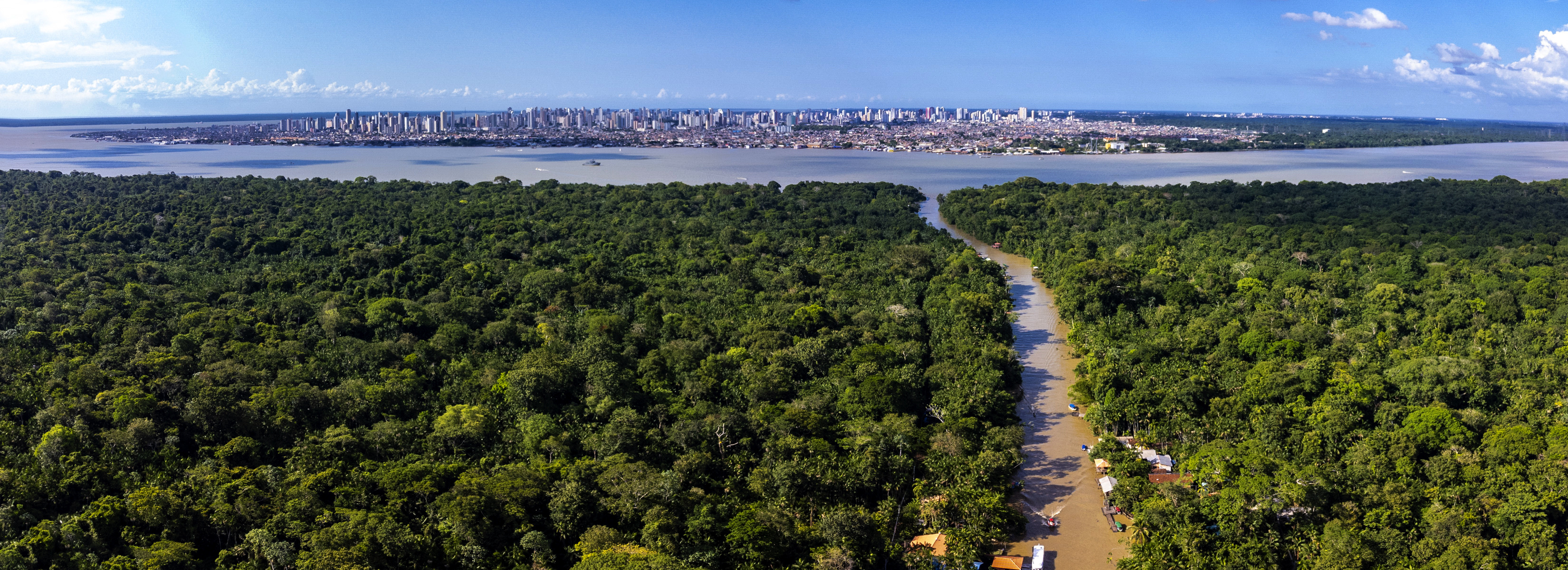
After years working at the intersection of government, business, and civil society, I have come to believe that enduring solutions arise not from imposing a single vision but from forging compromises that give every stakeholder a viable future—while still delivering real impact. This conviction is rooted in my Swiss upbringing, where compromise is not weakness but craftsmanship: yielding on the nonessential while protecting what matters.
Returning from COP (United Nations Climate Change Conference of Parties) in Belém, this insight felt more relevant than ever. The summit ended with an agreement that was both necessary and insufficient. It lacked a concrete fossil-fuel phase-out, stronger mandatory targets, and deeper integration of Indigenous perspectives. Even its most promising element—a commitment by wealthier nations to triple adaptation finance—remains only a pledge. More troubling was the failure to reaffirm the IPCC (Intergovernmental Panel on Climate Change) as the authoritative scientific foundation for climate policy. In such a context, the very fact that an agreement emerged may be the clearest signal that multilateralism is surviving, but under visible strain and growing calls for reform.
These outcomes reveal a widening disconnect across three levels of climate action. The WHY—the shared understanding that we must act for future generations—remains strong. The HOW—the frameworks and mental models guiding collective action—has become elusive. And the WHAT—the execution—too often collapses into compliance, with organisations doing only what peers do: reporting, measuring, ticking boxes. This prompts difficult questions: Are today’s governance mechanisms still fit for purpose? Is frustration justified? And is it unreasonable to imagine broader public mobilisation demanding that institutions keep pace with reality?
There is, however, an alternative path—one that avoids both resignation and destructive upheaval. It rests on four truths.
Truth 1: Reporting Is Not Transformation
John Elkington, creator of the Triple Bottom Line, intended not another reporting exercise but a challenge to capitalism’s direction. When sustainability becomes accounting, we miss the point. Real impact—not reporting—must drive our work.
Truth 2: Performative Sustainability Does Not Create Value
Research from Imperial College, covering 13,000 companies over 13 years, shows that organisations embedding sustainability into strategy outperform peers. Those undertaking structural transformation generate returns over 40% higher. Those relying on slogans fall behind. Half-measures don’t pay; real transformation does.
Truth 3: Governments and Public Funding Cannot Do This Alone
Even the most ambitious public efforts face limits. The EU’s mixed Fit-for-55 results reflect this: declining competitiveness, rising public debt, and only moderate emissions reductions. The private sector must lead—out of necessity—through business models where sustainability is profitable, not burdensome.
Truth 4: The Future Is Impact-Driven Profitability
We must move from compliance to creating measurable economic, social, and environmental value. Tools like impact monetisation, CO₂ insetting, and new business models allow positive outcomes to appear on balance sheets with the same legitimacy as physical assets. In this model, sustainability becomes a driver of growth and resilience.
The Triple Bottom Line opened the door; now we must walk through it. Tomorrow’s leaders will not be those who merely report but those who create and scale measurable impact. This requires understanding the structural conditions each stakeholder needs to engage. Without that, we risk powering an outdated engine with new energy sources.
To advance, we must translate the WHY into a strategic WHAT and an operational HOW. This involves collaborating with research institutions to define new markets and models, using multi-stakeholder platforms to test and deploy solutions, and enabling scalable impact monetisation.
Here, Globethics has a critical role: helping stakeholders understand the conditions for system redesign, mediating transitions, and supporting society as it moves beyond outdated mechanisms—without paralysis or upheaval. Globethics can act as coach, mediator, and guide for the transition the world now urgently requires.