
Global Ethics Forum 2026 in Bali: What We Heard and What Happens Next
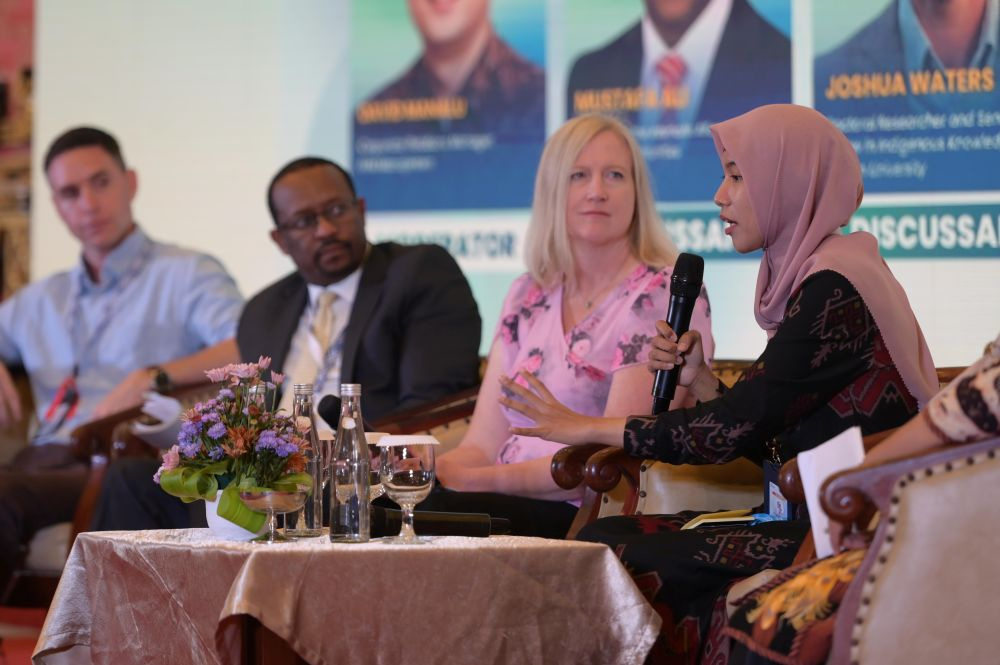
Globethics and YADEMA convened the Global Ethics Forum 2026 (GEF2026) in Bali on 20–22 October, the first edition held in Indonesia. The forum asked how responsible governance can contribute to human flourishing in business, technology and policy. It closed with a recommendation for the Geneva AI Summit in June 2027, outcome documents from both tracks, and plans to explore a regional ethics forum for Asia-Pacific.
The forum in numbers
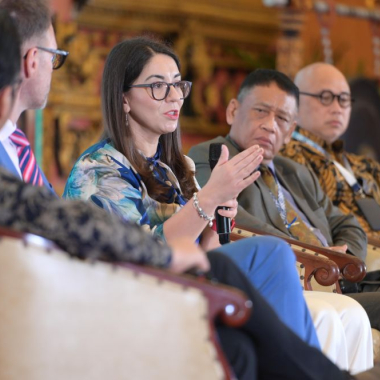
- 188 participants in person from 22 countries
- Almost 500 registered online from more than 90 countries
- 37 partners
- 45 speakers and moderators
- 57 young people in the Youth Ethical Leadership Bootcamp
- 15 journalists, with media partners Tribun Network, CNN Indonesia and National Geographic Indonesia
Progress needs a wider measure than growth
In his opening address, Dietrich Werner, President of Globethics, named what he called the central ethical dilemma of our time: a widening gap between the technological capacity we are acquiring and our ethical capacity to govern it responsibly.
He argued that economic indicators such as GDP cannot show whether people are flourishing. The Global Flourishing Study by Harvard, Baylor and Gallup measured flourishing among more than 200,000 people in 22 countries, across dimensions that include meaning and purpose, close relationships, and health. It ranked Indonesia first and Japan last. Wealthier countries did not fare better: the United States placed 15th and Sweden 18th, scoring high on financial stability but lower on meaning and connection. Dr Werner pointed to South Korea and Japan to make the same point. Prosperous, long-lived societies can still face work pressure, social isolation and mental health challenges. Longevity, he said, is not the same as flourishing.
In the high-level plenary, Ambassador Konstantin Obolensky of Switzerland said that cooperation needs trust, and that trust starts with predictable behaviour. The choice, he said, is between “the power of the law, or the law of the powerful.”
Governing AI: from principles to practice
A global KPMG survey of 47 countries found that seven in ten people want AI regulated, yet fewer than half believe existing rules are adequate. That gap between public demand and practice shaped Track 1, on responsible innovation.
In an Oxford-style debate on AI sovereignty and accountability, participants considered the motion that businesses should not deploy AI across borders unless affected countries and communities retain meaningful control over data, knowledge and governance. The motion passed, with support rising from 70% before the debate.
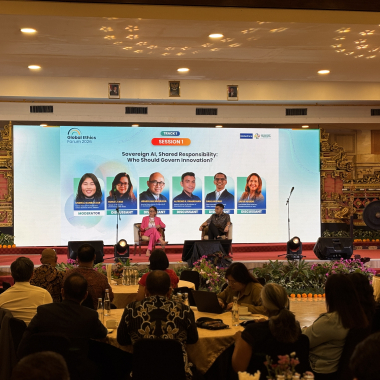
Safia Agueni of HealthSeed Ventures argued for accountability, de-risking and data sovereignty. Alfredo Ramadan of Indonesia’s Ministry of Communication and Digital Affairs argued for cross-border technology transfer and knowledge empowerment for developing nations. Both agreed on the need for regulation and de-risking. The open question is how to define “meaningful control” and put it into practice.
In the closing plenary, Track 1 rapporteur Dr Rusdian Lubis reported four findings:
- AI governance is about who benefits and who pays
- Accountability must lead to real action
- Diversity must shape how large language models are built
- Ethical principles must become everyday practice
Emilija Stojmenova Duh, former Minister for Digital Transformation of Slovenia and a member of the Globethics Board of Foundation, gave concrete steps for governments:
- Invest in education. People who understand how models are built and where data comes from can question the results of the technology.
- Build public-sector competence. Public servants often sign contracts and choose vendors without understanding how the technology works or what its impact will be.
- Test with the people most likely to be left out. Systems are usually tested on a young, connected “average user.” A service that works for 95% of citizens can still harm the other 5%.
- Regulate uses, not the technology. The EU AI Act defines uses that are not allowed, such as social scoring.
Human dignity, faith and flourishing
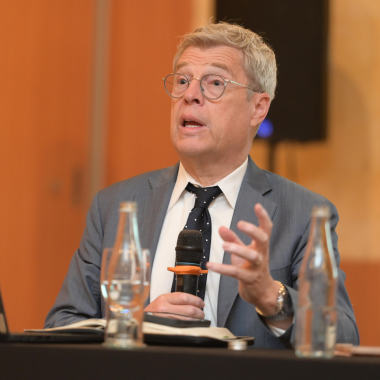
GEF Track 2 examined how human dignity, religious freedom and the participation of religious communities can support more just and peaceful societies. Prof. Brett Scharffs said that “recognising, respecting, and protecting the human dignity of every person is the best way to forge pathways to create, cultivate, and sustain societies where human flourishing is possible.”
Prof. Paul Martens summarised three findings from the Global Flourishing Study: young people are generally the least satisfied age group, high-income countries scored lower than some developing countries, and faith, especially active participation in a religious community, correlates strongly with flourishing. Prof. Do described the gap in Vietnam between having laws on religious freedom and applying them in practice. Prof. Devan Stahl said dignity is unconditional and does not depend on capacity or productivity. Dicky Sofjan, Vice President of Globethics and founder of YADEMA, added that human flourishing cannot be separated from ecological flourishing.
In the closing plenary, Track 2 rapporteur Dr Nina Mariana Noor reported that human flourishing is relational and multidimensional, resting on care, community, purpose, local wisdom and ecological well-being, not on income alone.
Young people and responsible content
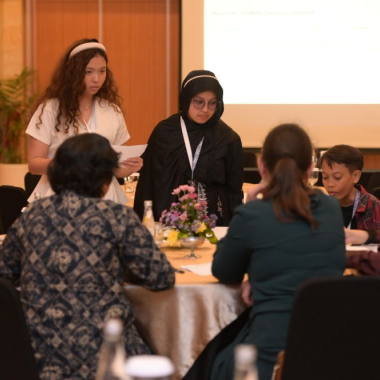
The Youth Ethical Leadership Bootcamp, supported by UNESCO Jakarta and National Geographic Indonesia, trained 57 young participants in responsible content creation. Dendi Andrian of National Geographic Indonesia introduced a three-step framework (brief, data, creative execution) and four ethical pillars: truth, dignity, empathy and human agency. The youth participants also joined the Forum plenaries and interactive labs, sharing their perspectives on the wider GEF conversations and contributing their key takeaways to the closing plenary.
What happens next
- Geneva AI Summit, June 2027. GEF2026 recommends that the summit prioritise ethical guidelines developed with policymakers, civil society, religious communities and Indigenous representatives, so that everyone has a seat at the table.
- Outcome documents. Papers from both tracks will follow, including a contribution to the Geneva AI Summit.
- Practical tools. The interactive labs covered a four-step approach to responsible AI policy and ethical risk management using the Globethics WISE Responsible Decision-Making Framework. A lab on integrity previewed the Anti-Corruption Masterclass, Building Resilient Institutions Through Integrity.
- A regional ethics forum. The Executive Roundtable on Philanthropy discussed an Asia-Pacific Ethics Forum, which Globethics and YADEMA are considering with partners.
Thank you
Globethics thanks all participants, speakers, moderators and rapporteurs, and the 37 partners who helped design and deliver the forum. We also thank our media partners, the Governor of Bali, the Embassy of Switzerland in Indonesia, and the volunteers and hospitality teams. Special thanks go to YADEMA, Globethics’ first affiliate organisation, for hosting the forum in Bali.
GEF2026 was a pre-event to the Geneva AI Summit in June 2027. Watch the plenary sessions on our YouTube channel.
You might also be interested in...

Blue Ethics Vol. 2
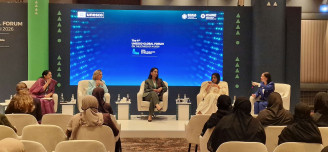
Globethics at the 4th UNESCO Global Forum on the Ethics of AI
Globethics' Executive Director and AI Ethics Manager joined UNESCO's Riyadh forum, moderating panels on financing, partnerships, and gender-inclusive AI governance policy.
Constellations of Hope: Cases and Perspectives of Transformative Learning
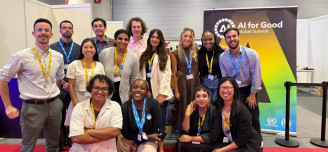
Civil Society Takes Its Seat at the AI Governance Table
Globethics brings 14 young ethical AI leaders to Geneva Digital Week 2026.