
Vasileios Rovilos
Ethical AI Governance Fellow 2026
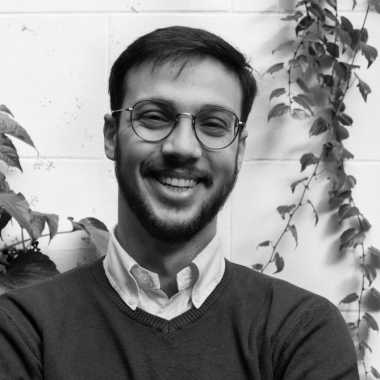
Vasileios Rovilos is EU Policy Director at Credo AI, where he heads the EU policy practice and directs the company's implementation of the EU AI Act and adjacent digital regulations, including the DSA, DMA, GDPR, NIS2 and CRA, inter alia. He spearheads contributions to the EU AI Pact and the Codes of Practice on GPAI Models and on Transparency for AI generated content, convening EU institutions, standardisation bodies, governments, AI Safety Institutes, civil society and SMEs to co design practical AI governance.
He previously served as EU Policy Counsel at the Future of Privacy Forum, as AI and Competition Policy Coordinator at Microsoft, and held two positions inside the European Commission at DG JUST and DG GROW. He is a designated Member of UNESCO's AI Ethics Experts without Borders Group and a Mercator Stiftung Fellow at the 2025 Türkiye Europe Future Forum. In March 2026, he served as a guest lecturer on the EU AI Act for the UC Law SF LexLab Law (AI Certificate programme). He holds degrees from the College of Europe, Leiden University and Maastricht University, and completed the University of Oxford Information and Media Leadership Programme for Legal Professionals and Policymakers. He is a PhD Candidate at the National Kapodistrian University of Athens, researching AI, freedom of expression and democratic discourse.
About the project
"A Global Framework for Algorithmic Expression Governance, a first-of-its-kind attempt to articulate shared, cross-cultural principles governing AI's role in public discourse, grounded not only in comparative law but in the plural ethical traditions, including socio-technical, communitarian, and humanistic ones, that different societies bring to questions of truth, trust, dignity, and voice.
Through the Fellowship, I would use the forum provided for dialogue at the heart of the Globethics programme to stress-test and enrich these principles beyond Western constitutional assumptions, drawing on the perspectives of scholars, civil society actors, and practitioners across traditions and geographies."