
Africa’s Digital Future Needs More Than Technology
Susan Ackah, Globethics Western Africa Regional Manager; Learning Operations and Digital Support Officer. November 2026.
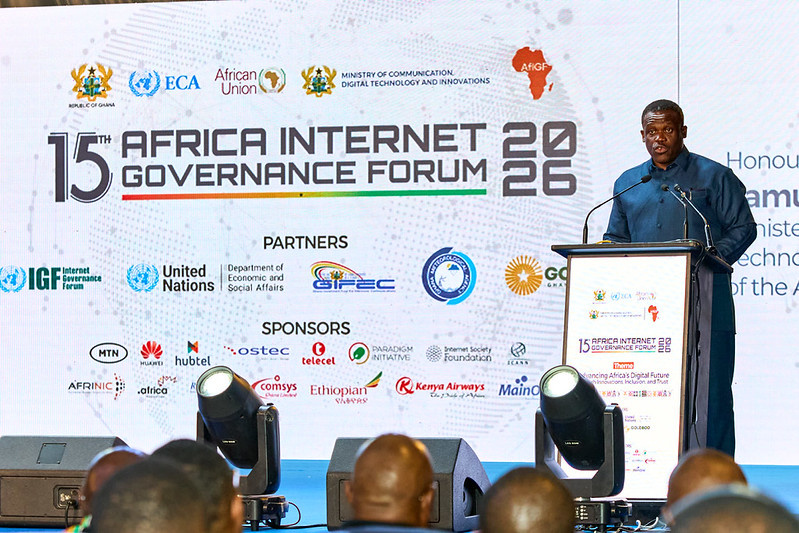
Africa’s Digital Future Needs More Than Technology. Ethical Leadership and Inclusion Matter.
Who gets to shape Africa’s digital future?
That question stayed with me at the 15th Africa Internet Governance Forum (AfIGF), held in Accra from 2–5 November 2026 under the theme “Advancing Africa’s Digital Future Through Innovation, Inclusion and Trust”.
The 2026 AfIGF included dedicated Youth and Parliamentary tracks and, for the first time, a Children track and Judicial Dialogue, evidencing the breadth of voices needed at the proverbial table. Digital governance affects children, youth, citizens, businesses and public institutions; their perspectives must inform decisions.
From discussion to responsibility
Digital and Internet governance may sound technical, but it concerns everyday questions: who can access the internet, how personal information is protected, whose voices shape digital policies, and who is accountable when technology causes harm.
A focus group on a Pan-African approach to AI governance prompted me to emphasise multi-stakeholder engagement and collaboration. Progress requires cooperation among public institutions, civil society, researchers, business and technical communities. etc. Digital sovereignty can also be strengthened by building institutional and citizen capacity to innovate, use and govern AI responsibly.
The presentation of Paradigm Initiative’s LONDA 2025 report, which examines digital rights and inclusion across 29 African countries, reinforced the value of evidence. A session on Civil Society Preparedness for Digital Public Infrastructure (DPI) systems such as digital identity, payment platforms and government databases raised another important point. These systems can improve services but also affect people's rights and relationship with the state. Civil society needs to be engaged early in their design, policy development and procurement, and not only after deployment.
Discussions on women’s leadership and youth pathways into digital governance were equally important. Women and young people need skills, mentorship, networks and real opportunities to influence decisions. One clear message seemed to stand out: Women and young people must show up and be present not only as users, but as designers, experts, decision-makers and leaders. This calls for sustained learning, collaboration and meaningful participation.
Why this matters to ethical leadership
These conversations connect directly with Globethics’ work on responsible governance, ethical leadership and AI ethics. Policies, regulations and technical standards matter, but they are not enough. We must also ask who makes decisions, what values guide them, whose interests are considered and how individuals and institutions remain accountable.
Africa’s digital future should not be shaped without the people and their concerns which it is meant to serve. Globethics and the emerging Africa Affiliate Office have an opportunity to contribute an ethical perspective.
My thanks go to the AfIGF Secretariat, as well as the Forum’s partners and sponsors, for making this opportunity possible. This was both my initial participation and a substantial introduction to the Digital Governance ecosystem on the continent.
I also greatly appreciate the connections made with participants and experts from across the continent, and the opportunity to learn about the valuable work they are advancing in Ghana, Nigeria, Chad, Kenya and beyond. Overall, it was an engaging and enriching experience. I left with new connections, much to learn, and an even greater interest in continuing to engage with and contribute to this growing ecosystem.
As we look ahead to advancing Africa’s Digital Future, our collective task lies in turning dialogue into sustained engagement, ensuring that innovation advances alongside inclusion, trust and accountability.
Africa’s digital future depends on more than connectivity and innovation. It also requires ethical leadership, meaningful collaboration, inclusion and accountability.
Some related links